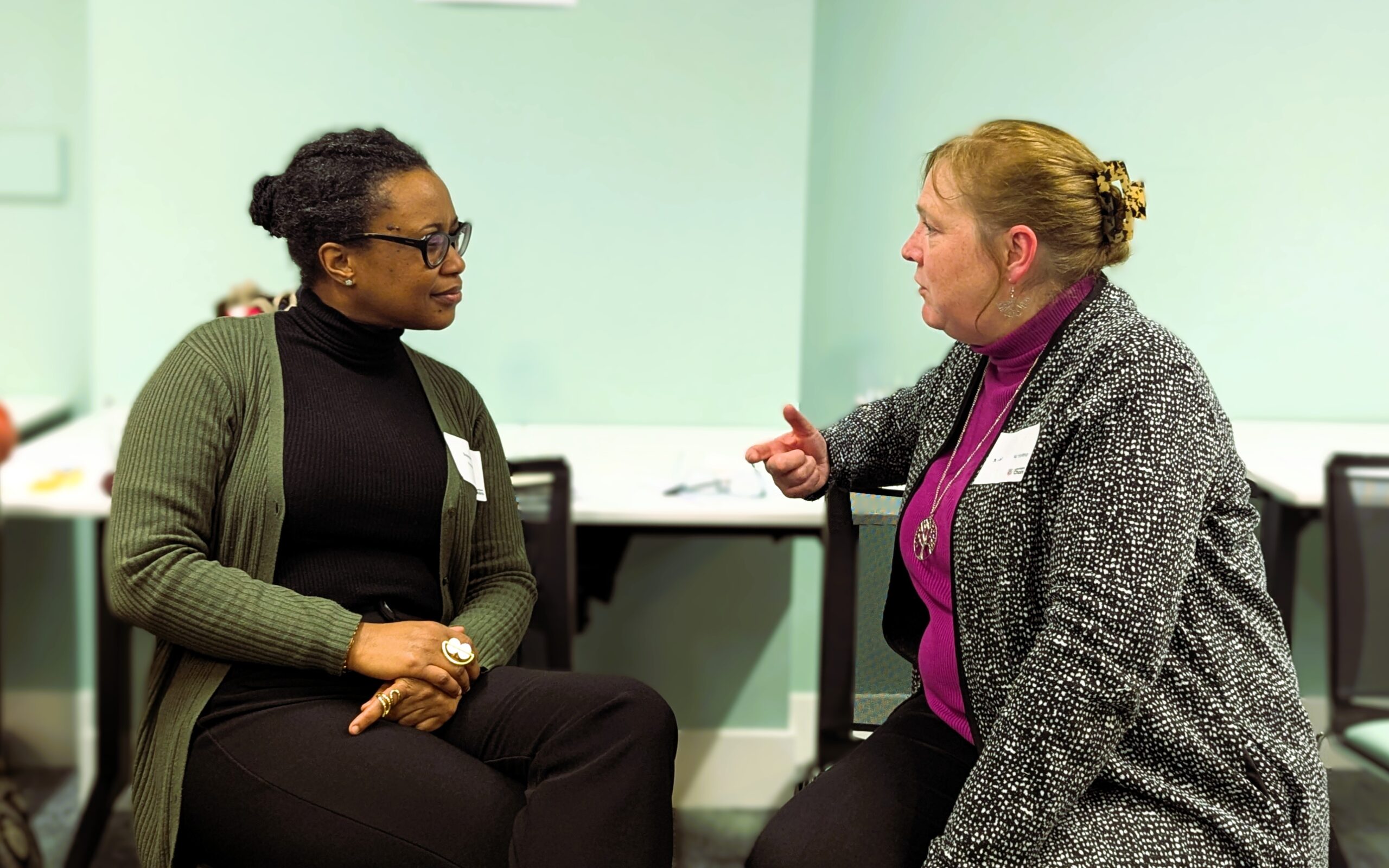
“No chair is an island” might well have been John Donne’s opening sentence, if the 16th century poet had been commissioned to write this blog on the merits of co-chairing a charity.
For me, co-chairing is a “no-brainer” solution to the challenges, the workload, and the mental stress so frequently faced by sole, and indeed, solitary, charity chairs. Or to use another well-known bon mot, “a problem shared is a problem halved”.
A change to traditional models is needed
My own conversion to the undoubted benefits of co-chairing began with the development of the Black and Asian Future Chairs’ Academy (BAFCA) programme set up by the charity I founded, Board Racial Diversity UK. When we launched BAFCA in 2023 with the aim of developing a pipeline of future Black and Asian Chairs, we had a great response from current Black and Asian trustees interested in stepping into chair roles. However, it became clear that the commitment and time required to effectively fulfil the raft of multi-faceted chairing responsibilities was much more than the BAFCA aspirants – younger and largely in full time work and/or with childcare responsibilities – were able to meet, despite their keen appetite for taking on chair roles. ’
So the traditional model of the sole charity chair must change if the charity sector is to reach the peak of a diverse and inclusive charity board leadership, able to draw on the untapped skills and talents of a much wider and representative population.
So why is co-chairing a “no-brainer”?
- The work and the mental stress is shared.
- Co-chairs can support, complement (or compliment 🙂) and learn from each other.
- Co-chairs can bring different perspectives and more options to supporting the CEO and solving organisational challenges.
- Co- chairing can be a solution to succession planning or for filling the gap, if for whatever reason, one of the co-chairs is temporarily unable to find time to do the job properly.
- Co-chairs can also be a useful approach to putting lived experience at the top of governance, with, for instance, a co-chair with lived experience of the issues the charity addresses, working alongside a chair with other skills and experience.
- Appointing co-chairs for board working groups/sub-committees enables the development of other – and particularly younger trustees – for future board chair roles, and helps share the workload more evenly among trustees.
- Co-chairing can definitely help meet the increasing challenge for charities of recruiting chairs by widening the pool of applicants in a climate where chair vacancies are daily being advertised by all types of charities.
Finally, I see the co-chair model as a step firmly in the direction of inclusive and collective leadership, where charity leadership is not solely dependent on one person, however committed.
As practical evidence that the benefits I’ve highlighted above are genuine, Board Racial Diversity UK has thrived on having excellent co-chairs, respectful and supportive of each other. They have brought a wider range of skills, experiences and personal qualities than we’d ever expect to get in one person. Two of our working groups are co-chaired by two of our young, first-time trustees working alongside two more experienced “hands”. The crucial contributions of these two young trustees explode the myths that young trustees, recruited for their skills and lived experience, and with proper support, encouragement and confidence, can’t step into trustee and chair roles as effectively as older and more experienced trustees.
Are there any challenges to co-chairing?
The obvious practical challenge for co-chairing is recruiting two people who would work well together, who individually bring the skills and qualities which match the role description, and ideally, for me, come from different backgrounds and bring different perspectives.
The second is the effort and patience to get three, invariably busy people together – co-chairs and the CEO – in the same room, or even zoom, as often as required, for good governance and pace of decision making. However, this can be mitigated by early diary planning, trust and good communications between the co-chairs and a sensible split of responsibilities, which won’t require both co-chairs to always be present at the same time.
Things to consider
Assignment of co-chair responsibilities
This assignment of specific responsibilities needs to build on the respective strengths and expertise of each co-chair. One might be more of a people person. The other might be strong on fundraising. So, for instance, one might take on the direct management of the CEO, the other might lead on the fundraising strategy. You’d expect both to have interest in and experience of strategic thinking and planning. It will be important for the co-chairs to communicate clearly to the rest of the board, the executive team and any volunteers about their division of responsibilities.
Chairing board meetings
Given the key role of board meetings in the effective governance of charities, you’d expect both co-chairs, like all other trustees, to attend all meetings. However, many chairs would agree that there’s generally a fair amount of stress attached to the preparation for and chairing of board meetings. Sharing this task – with co-chairs chairing alternate meetings – makes a lot of sense.
Succession planning
Think seriously about the co-chair option at your next board meeting when succession planning is on the agenda. When recruiting new trustees or reviewing your current ones, reflect whether any of them could be your next co-chair.
Remember two heads are better than one!
About the author
Malcolm John is the founder of Board Racial Diversity UK and an Association of Chairs trustee. Contact him on [email protected]
Other useful resources you may find helpful
- Guide to co-chairing (member-only resource)
- Lara Sonola interview on co-chairing tips

.png)